This project aims to evaluate how the different platforms define and report to respond to different forms of online harassment within their platform-specific policies. In doing so, we have developed a new framework for charecterising harassment. In the future, we plan to develop a research capability that draws from this framework, to continually monitor platforms and how they change over time.
Main findings
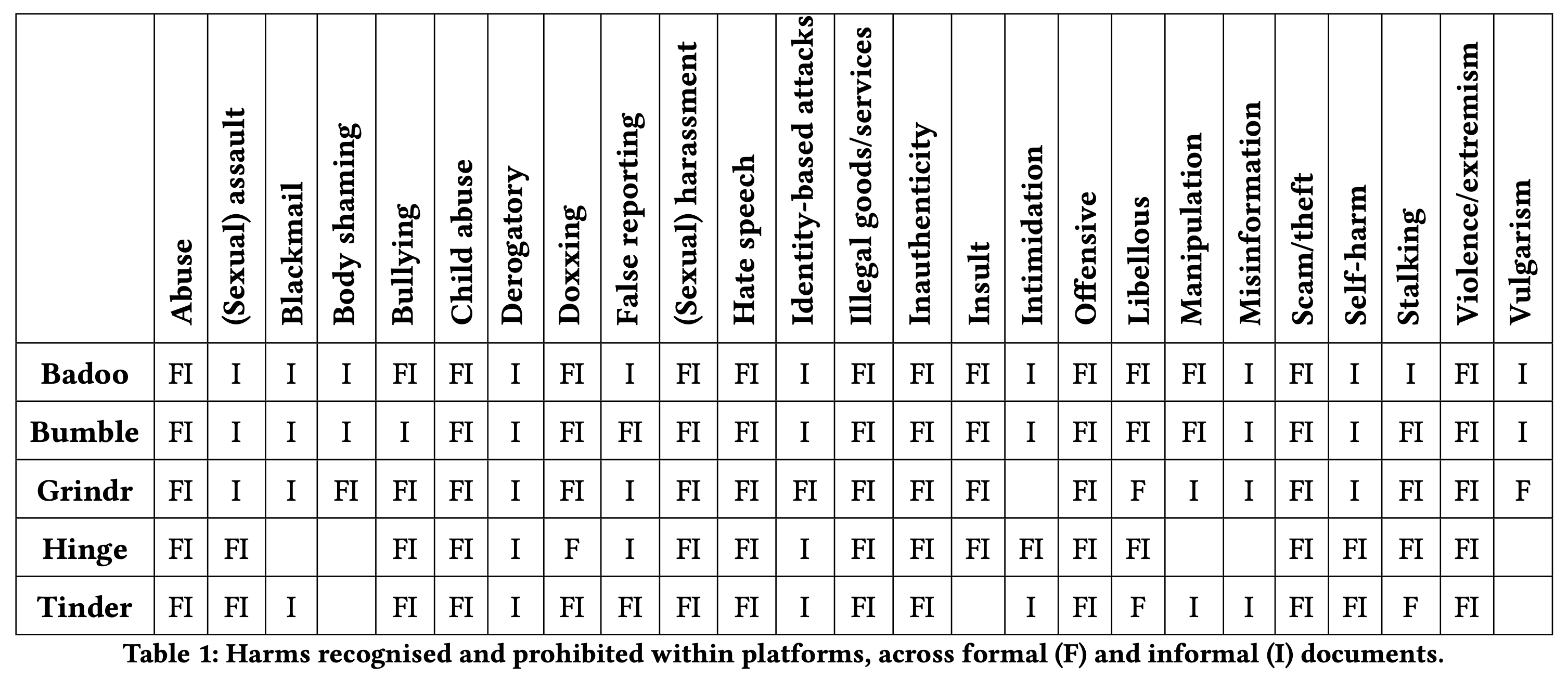
Platforms recognise a variety of harms across their platforms (see Table below)
Platforms charecterise harms based on the nature of the harm (e.g., behaviour, threat, promotion), their repetitative nature, and the target of the harm (e.g., individuals, groups, children, and those with protected characteristics).
We find platforms balancing platform and user responsibility, often encouraging users to remain on the platform for as long as possible to allow the platforms to provide users with protective mechanisms.
There are tensions in the advice being given by platforms related to safety. For example, some platforms prohibit and/or technically restrict taking screenshots, whilst also providing safety advice that involves the taking of screenshots.
There are geographic differences in user access to external safety tools and resources, with many catering only to the US or Canada. Additionally, tailored protections vary by group.
Through this research, we have developed a comprehensive harassing harms framework that is grounded in policy documents from across 25 platforms.